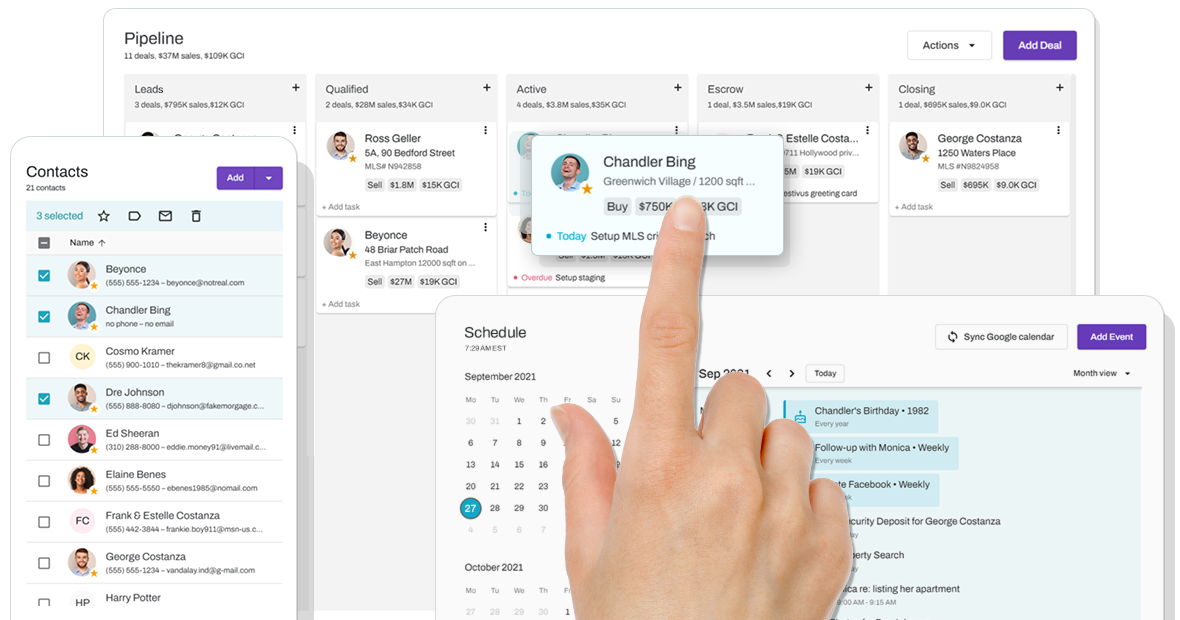
Implementing a new CRM (Customer Relationship Management) system is an important step for any real-estate professional. It will result in increased efficiency and more achievement. The change could cause stress and even disruption in the event that it is not handled in a timely manner. A CRM is much more than just software. It is a major shift towards processes and workflow management. Implementations that are poorly managed can lead to poor user adoption, data confusion, and, ultimately the loss of investment. The approach to the adoption process is far more crucial than the actual benefits of the technology upgrade. To ensure smooth transition it is essential that the entire team be involved as well as the principal agent, in the process of planning and communicating. Real estate professionals can successfully navigate this change by implementing a tried and true set of the best methods. This will ensure that the CRM is an essential asset starting from day one. These 10 steps offer detailed guidelines for a CRM adoption.
1. Establish clear goals and secure the support of your executive sponsor
At the top, it's important to champion the change. The broker or leader of the team should be the primary advocate and explain the "why" for the change. This requires defining specific objectives that can be measured for adoption of CRM. You would like to boost lead response by 50 percent. Increase referral business 20 percent? Reduce the time you devote to administrative tasks by ten hours per week? The clarity of your objectives is a great way to rally the team. It also gives you the basis upon which you can measure the effectiveness.
2. Include the team in the selection process from the start.
A CRM imposed without the agents' input will likely be met with opposition. To encourage participation from key users, which includes agents who are tech-savvy and less tech-savvy ones, make sure to include them in the demo and selection procedures. The daily struggles of agents are valuable. They feel a sense of ownership when they have a role in choosing the right platform and are more committed to making the system successful. This collaborative process ensures that the CRM chosen can address actual issues and offers an easy-to-use interface that is accessible to the entire team.
3. Invest in Comprehensive, Role-Specific Training
In the event that you think agents "will come up with a solution" will lead to failure. Training sessions that are planned and obligatory cannot be negotiated. A one-size-fits-all training program is not the best solution. Create separate training sessions for team leaders and team members, focusing on pipeline management, reporting and lead management. For agents, you can then arrange separate sessions that are focusing on mobile-related functionality and automation or lead management. Training should be based on real-world scenarios. Examples include importing an existing Zillow Lead or recording after an event. Plan follow-up "refresher" sessions a few weeks after the launch to answer the issues that arise from real usage.
4. Make time for a thorough data migration and clean-up
Do not blindly import outdated data into a new system. Garbage out is garbage in. Before moving take the time to clean out the database. Eliminate duplicates and information that is outdated. Separate contacts into clear lists. You can work with the CRM vendor define old fields and new ones. Slow, methodical data migration is superior to a rapid import of a sloppy listing that will undermine the user's confidence.
5. Start with A Pilot Group Prior to Full Rollout
Instead of switching the switch for all of the office at once, start the CRM with a smaller friendly group of agents. The group will be able to test the workflows and identify unforeseen issues. They can also provide feedback about the training process and the configuration. They could serve as useful cases for the other groups. The lessons and successes learned from the group of pilots could be subsequently applied to the other members of the team in order to boost momentum and ease the fears and anxiety other agents may have when the rollout is complete.
6. Standardize Workflows and Document them
Standardization is essential to the effectiveness of CRM. The team should document core processes and then decide on these before launching. For example: What is the specific steps to take to process a new online lead? What is the exact drip campaign that a new buyer lead needs to be part of? What should be the procedure for a transaction to be transferred through the pipeline? The presence of these documented procedures ensures that each team member is using the system with consistency and is essential to ensure accurate reporting and efficient management.
7. Integrate CRM with a Daily Habit
The adoption process is gradual, one habit at a tim. Help agents to make CRM their home page or the first tab they visit in the morning. The goal of creating a unified base of truth is what you want to achieve. Mandate that all client communication--without exception--is logged in the CRM. Refrain from using personal emails or note apps. Incorporating all activities related to clients within the CRM makes it the center of the business and its worth is apparent.
8. Assign "CRM Champions" to Provide Ongoing Support
Even with excellent training, there will be questions. Choose one or two tech-friendly agents or staff members or an administrator to serve as "CRM Champion." They receive greater training and are the primary contact point for the whole team. They also provide an internal resource to answer easy, quick questions. This can reduce stress and prevent bad habits from forming. It also eases the workload on the broker or manager.
9. Make sure you check-in regularly and celebrate Early Results
Implementation is a continuous process, not an moment in time. Set up weekly or biweekly meetings for the first few months to discuss challenges, provide advice, and stress the importance in using the new system. In these meetings, you can publicly highlight "wins"--such for an agent who turned a lead into a sale following up with an automated sequence or a team who closed a deal tracked perfectly in the pipeline. Positive reinforcement builds morale and demonstrates how effective the new system.
10. Continue to review analytics and improve usage
The job doesn't end once the CRM has been put into place. Team leaders and brokers should be using CRM's reporting tools to monitor business health and adoption. Are agents logging their activities? Does the pipeline of leads grow? What lead sources are converting? This information will allow you to make better business decisions and will guide your ongoing coaching. Examine the initial goals and evaluate progress. This method of data-driven planning ensures the CRM is transformed from a simple asset into an effective tool to help with long-term business growth. Read the most popular linked here on best crm for real estate for more recommendations including crm and marketing automation, simple crm, crm and automation, crm management systems, email and crm, custom crm systems, crm for real estate agents, crm means, email and crm, top ten crm and more.

Top 10 Metrics Realtors Can Track To Measure Their Success With Crm
In the modern, data-driven world of realty intuition alone won't suffice to create an ever-growing, sustainable business. A CRM (Customer Relationship Management) system is much more than an organization tool. It is also an effective analytics engine that, if used properly, can give you a precise and objective assessment of your performance. It is when realtors begin to evaluate important performance indicators, or KPIs, that they can appreciate the importance of CRM. Agents can't effectively manage their time or resources if they don't track the correct metrics. Real estate agents can turn raw data into actionable intelligence by continuously monitoring important data points within their CRM. This allows for targeted coaching, strategic decision-making and an active approach to business expansion. The ten metrics listed below are crucial for any realty professional seeking to measure their success accurately and identify specific ways to increase their performance.
1. Lead Source ROI (Return on Investment)
This is probably the most significant measurement of marketing. It is essential to keep track of not just the number of leads that come from each source (e.g. Zillow.com. Realtor.com. Personal websites. Social media. Referrals) however, also their costs and conversion rates. The CRM can assist you to calculate the cost per lead from every source and, ultimately, cost per closed deal. If you know which channels bring in the most business (not only the most leads) then you are able to confidently shift your marketing budget to those that yield the highest results, maximizing the amount you spend on advertising.
2. Lead Response Time
The speed at which you can convert leads is crucial. The metric measures the average time it takes for you or your team to get in contact with a lead after they've expressed an interest. CRMs will automately time stamp leads creation, your first call or email. The industry benchmark is minutes, not hours. This metric helps you assess the efficiency of your lead response procedures. A slow average response time is a clear indicator that your process needs immediate improvements, since you could lose an enormous amount of potential customers to competitors that respond faster.
3. Lead Conversion Rates (Globally and by Source).
This measurement shows how you can convert leads to customers. The overall rate of conversion is the percent of all leads which become a buyer agreement or listing agreement. It is more informative to monitor the conversion rate based on source. While referral leads are smaller in terms of volume however, their conversion rates are 50percent while online portal leads only have a 2% conversion rate. This knowledge allows you to prioritize your follow-ups and establish realistic expectations regarding the possibility of each lead type and will permit better forecasting.
4. Sales Pipeline Velocity
The velocity of the pipeline measures how quickly a lead will be able to move from the first contact to a close of deal. This is an excellent indication of how well your sales procedure is functioning. In order to do this the CRM will monitor the amount of time a deal needs to progress through every stage. A slow velocity for a particular stage (e.g. negotiation) signals there's a problem. This allows you to identify the cause, whether it is lack of training, inefficient system, or a slow follow-up and develop a specific solution which will accelerate the speed of your sales cycle.
5. Listings vs. Buyer-Side Deals Ratio
Tracking the proportion of your transactions on the listing side to buyer-side transactions provides crucial insights into the financial health of your company. Listings typically provide greater leverage, brand exposure, and control over the transaction timeline. If the buyer side deals are in a way disproportionately big they could indicate a strategic growth area. Monitoring this ratio on your CRM will allow you to set deliberate objectives to achieve more listing appointments and assure a stable, visible and potentially successful business model.
6. Average Sales Price and Commission for each Transaction
It is not only important to monitor the total volume and the price of sale and your commission. This will allow you to know where you stand in relation to other markets and how profitable you can be. Are you consistently working in a lower price point which requires a greater number of transactions to meet your revenue goals? Is the average commission percentage in line with your expectations? This metric allows you to determine if your plan and financial goals are on the same page. It can be used to inform decisions about the customer base or the service offerings.
7. Client Acquisition Cost (CAC).
This measure calculates the total cost of acquiring a single client. This includes advertising and marketing costs, technology subscriptions, and other expenses related to lead generation. They are then multiplied by the number of customers that you have acquired over a certain period of time. Comparing it to your average sales commission, you can see the actual net revenue. A higher CAC suggests that your strategy for marketing isn't as efficient. To maintain profitability, you may want to increase conversion rates or tweak your strategy.
8. Task Completed Rate and Activity Volume
The success of real estate is dependent on regularity. Your CRM must track important activity metrics, such as calls made and emails sent, appointments scheduled, and the addition of contacts. It should also keep track of the time to complete scheduled tasks. Low task completion rates can suggest a lack in discipline or an unrealistic task load. Monitoring these indicators (activities) together with the an indicator that is lagging (closed sales) will allow you to compare your efforts to the results, and make sure you are keeping the habits that are driving sales.
9. Engagement Metrics for Sphere of Influence
Your most valuable assets are your customers who have been with you for a while and your referral network. Utilize your CRM to monitor metrics relating to this segment. This includes the proportion of your business that comes from repeat clients and referrals in addition to the click-through and open rates for your SOI emails, and the frequency of your contact points. If these indicators decrease the likelihood is that your efforts to nurture have diminished and your referral pipeline is at risk. This data prompts you to re-engage and strengthen the relationships you have with these people.
10. Customer Satisfaction as well as Net Promoter Score (NPS)
The key to long-term business success is a satisfied customer. Make use of your CRM to automate sending a customer satisfaction questionnaire or a Net Promoter Score (NPS) Question ("On a 0-10 scale How likely would you be to recommend me?") after the closing. It is possible to track the score over time gives you direct feedback about your service quality. It is crucial to take action immediately if your score is low or declining. In addition, your promoters will be the foundation for future referrals. That's why this is an important measurement. Read the best real estate crm software for blog info including best crm management, sales for crm, top ten crm, best crm management software, data in crm, crm software meaning, popular crm softwares, crm application, crm for realtors, marketing automation and more.